


If you told me a year ago that my mental health breakdown would eventually touch tens of thousands of people, I would’ve furrowed my brows, given you the side-eye & said “pshh, there isn’t a chance in hell.”
Because from where I was standing, there was no world where putting my deepest struggles & insecurities on display felt like an intriguing idea. I thought talking publicly about anxiety, identity, perfectionism, & everything else I had been carrying would send people running in the opposite direction.
Instead, people walked toward it.
At first, it was a few curious people here & there.
Then small groups. Then crowds. Before long, strangers were standing in front of my work, quietly reading words born from one of the hardest seasons of my life. Some smiled. Many cried. Some walked away clutching a letter to their chest as if they’d been carrying its weight long before they ever found it.
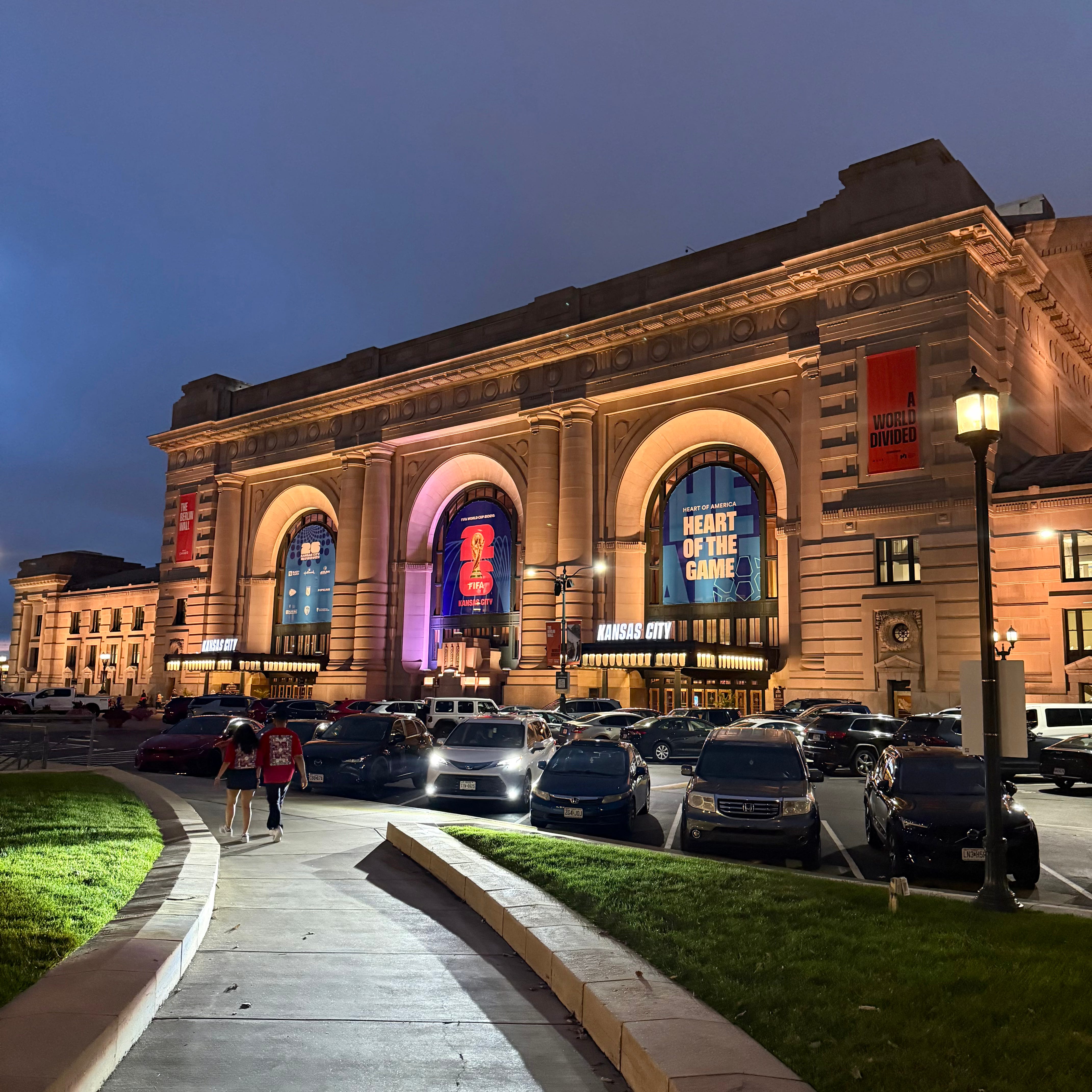
If you’ve found your way here because you stumbled across Take What You Need at Union Station or my recent posts on social media, welcome. If you’ve been around since the beginning, first of all... thank you.
It’s kind of wild that a deeply ambitious, over-functioning perfectionist who spent a decade building a career around strategy, performance, & polish somehow ended up creating a public art installation about feelings.
The funny thing is, I never set out to create an installation.
I had a mental health breakdown.
Then I had a few ideas.
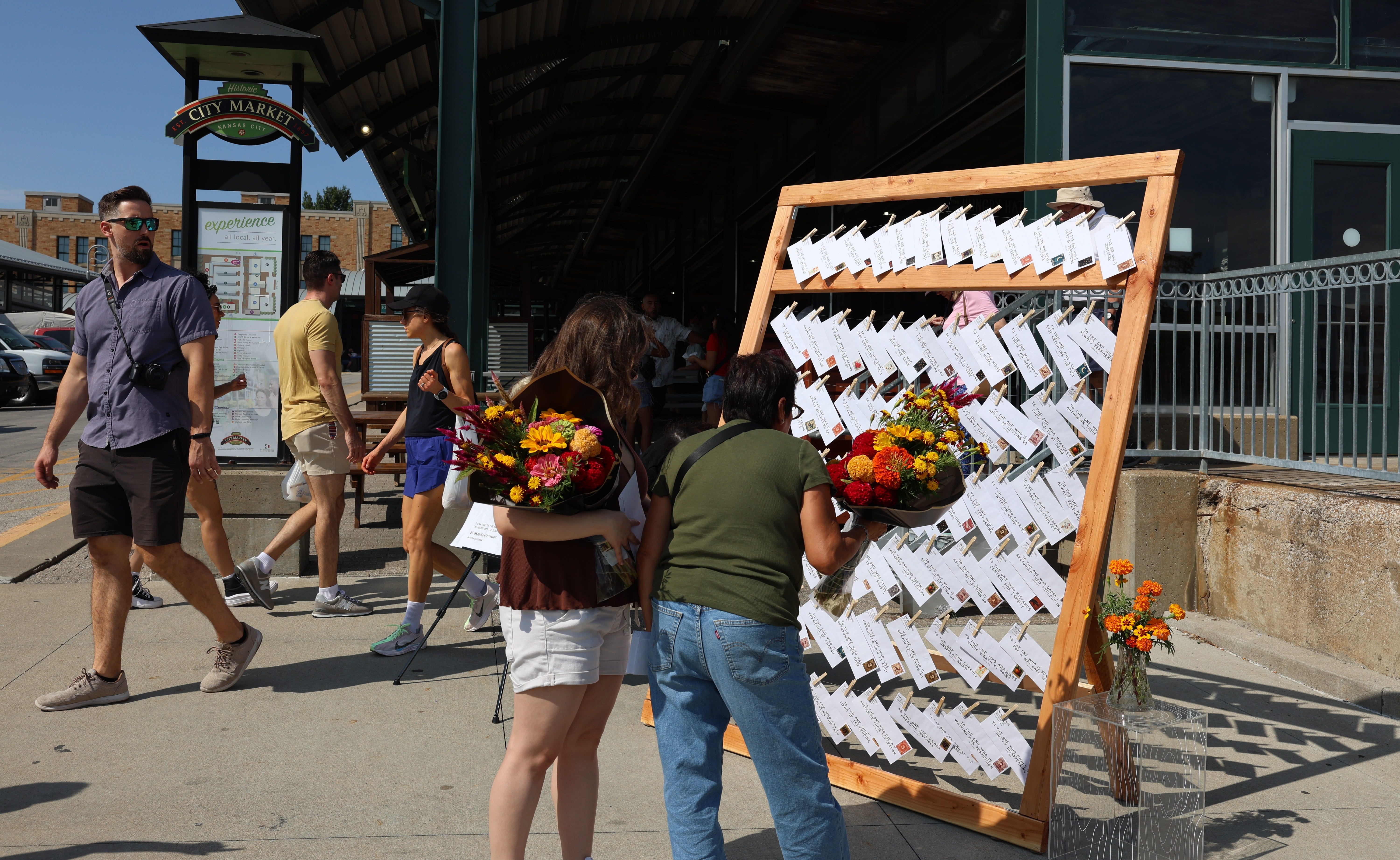
I turned to film & prose; scripted, produced, & shot The UNBecoming, then turned my pain into a collection of letters, now known as Take What You Need. But I didn’t want them to just live on a screen. I wanted people to physically encounter them. That feeling led me to send an email to City Market asking if I could set it up there for a weekend.
They said yes.
Then somehow that weekend became a residency.
That residency turned into invitations to college campuses, coffee shops, conferences, community events &, most recently, Union Station during the FIFA World Cup festivities, where thousands of people passing through one of Kansas City’s busiest spaces stumbled upon a wall of hanging envelopes & thought, “Sure... I’ll see what this is about.”
I still remember setting it up that first morning at City Market.
Objectively speaking, it looked a little ridiculous.
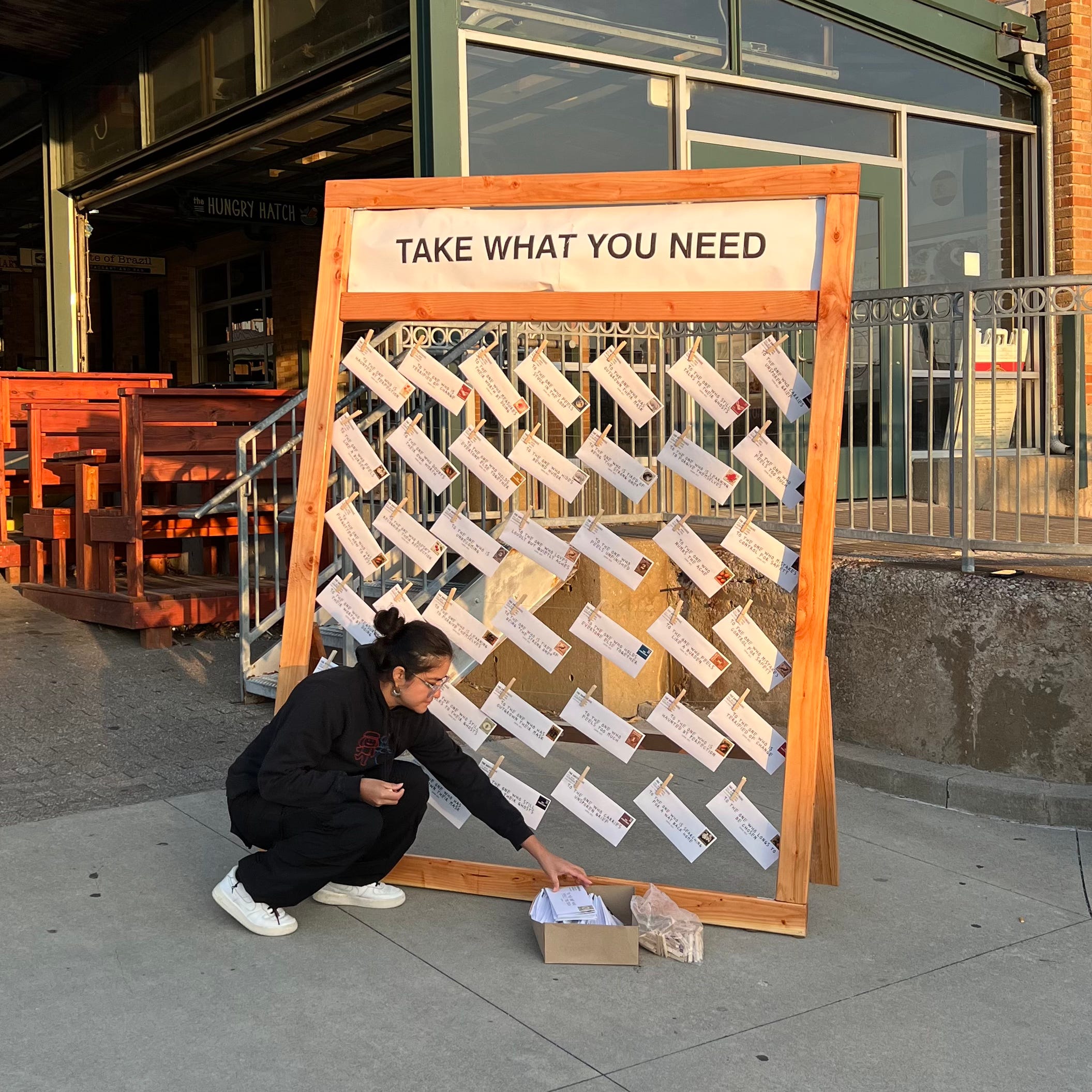
A large wooden frame that was very much “built in my garage” than “museum installation.” Fishing line. A bunch of envelopes swaying in the wind. A crumbled banner that read ‘Take What You Need.’
Meanwhile, my best friend helped hang the first letters while I stood back snapping photos, quietly battling the relentless monologue of my inner anxiety:
“Is this too much?”
“Who do I think I am?”
“What if nobody stops?”
And what I found most dreadful…
“What if people stop... and hate it?”
Those questions weren’t really about the installation. They were about the fear that comes with being seen. That universally human fear that maybe the thing you created from your heart wouldn’t matter to anyone else.
Then people started stopping.
One person became five.
Five became fifty.
Eventually, I stopped counting altogether.
The thing that surprised me most wasn’t that people connected with the letters.
It was how quickly they trusted them. I’ve watched strangers walk up, scan thirty-three envelopes for less than a minute, pull one down, read it, & immediately soften. Sometimes they smile. Sometimes they cry. Sometimes they quietly put the letter in their pocket & keep walking.
And every so often someone pulls me for a chat.
Love Island fans, you know what I mean.
Those conversations have become one of my favorite parts of the installation & not because people tell me extraordinary stories. But because they tell me extraordinarily human ones: a woman grieving her husband, a college student quietly battling anxiety, a father trying to hold everything together for his family. Someone who picked up a letter for themselves... and then another because someone else’s face immediately came to mind.
Different stories.
Same ache.
As I sit here writing this from my bedroom, that’s probably the biggest thing this work has taught me.
It’s incredibly easy to forget that EVERY single person we pass has an inner world as rich & complicated as our own. The person rushing past you to catch a train. The cashier scanning your groceries. The person who cuts you off in traffic. The family laughing a little too loudly across the restaurant.
Every single one of them is carrying something you’ll probably never know about.
Standing beside this installation for the past year has reminded me of that every single day. The response has been surprisingly—or maybe unsurprisingly—the same no matter where the installation goes.
City Market.
College campuses.
Mental health conferences.
Concerts.
Union Station.
People from different countries, different cultures, different religions, different political beliefs, & different walks of life all seem to arrive at the same place.
They slow down.
They feel seen.
They remember, even if only for a moment, that they’re not carrying life alone.
I’ll be honest, I didn’t begin this chapter with a grand vision. I wasn’t thinking about residencies, speaking engagements, or building a body of work around mental health. I just kept putting one foot in front of the other. Every opportunity led to another email, another conversation, another chance to keep showing up. Somewhere along the way, clarity caught up & wheww, how thankful I am for clarity.
But it wasn’t because I sat down one day & figured out my purpose. It was because I kept saying yes to the thing that felt true, even when it scared me.
A year later, I’m so grateful that I didn’t allow vulnerability to stop me. That I pulled back the curtains & let people see my inner world, the messy, unfinished, deeply human parts I spent so much time trying to hide.
And that’s how I believe we move humanity forward: by remembering that beneath all of our differences, we are all humans having an interconnected-complicated-beautiful-and-sometimes-difficult human experience.
Sincerely,
A human reminding other humans they’re human


